Is your record player too fast or slow? Does your favorite music sound a little off? When compared to digital recordings or streaming platforms, are your records lower or higher in pitch?
Then step on up as we explore some of the key reasons your record player might be playing too fast or too slow as well as some of the steps you can take to rectify it and once more achieve a sanctimonious listening experience.
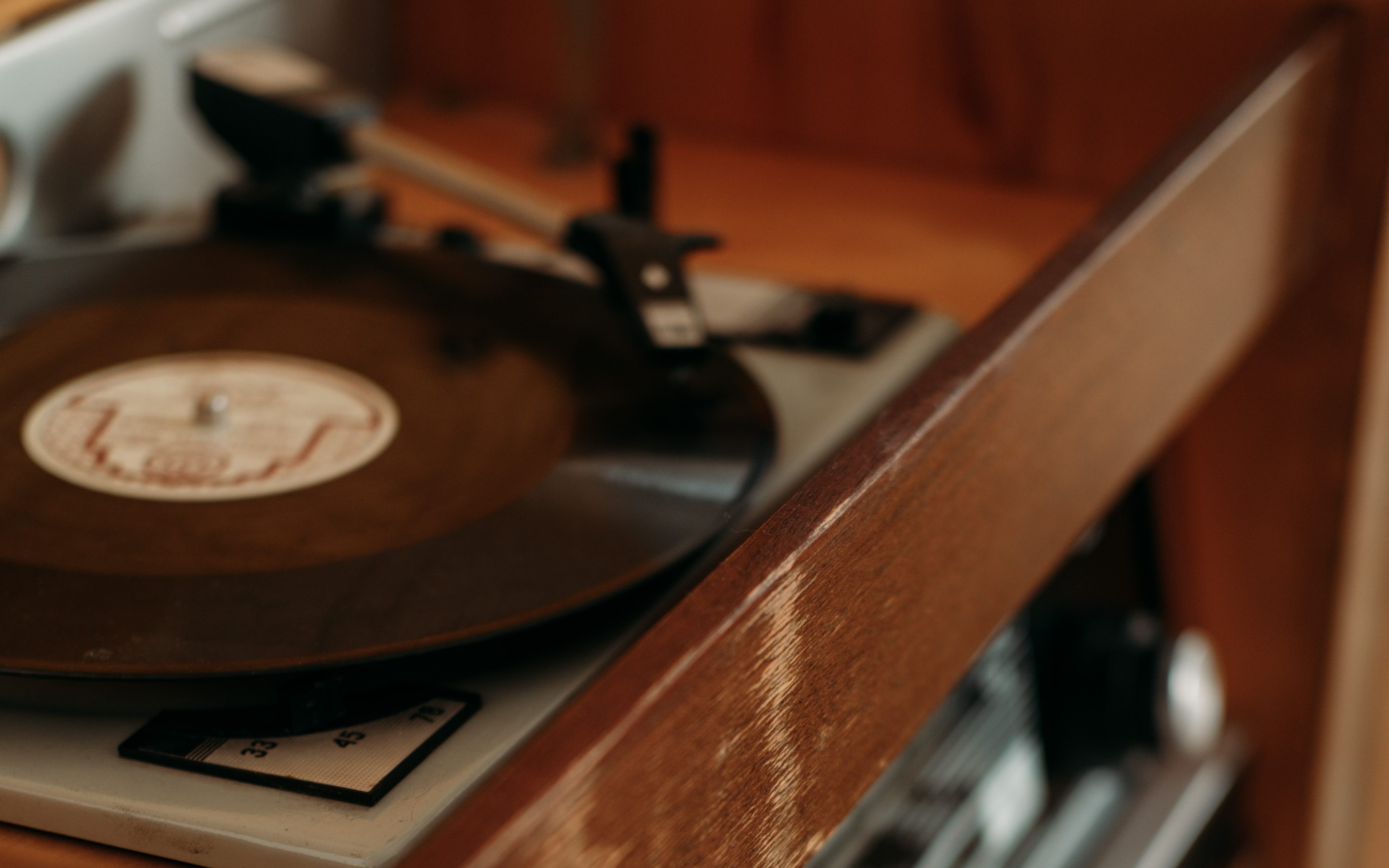
Too Fast?
The easiest way to tell whether your record is playing at the correct speed in the modern day is to cross reference it with a digital rendering of the track. Such a rendering can be relied upon to represent the artistic intentions of the record, especially if it is a more commercially popular and critically acclaimed record.
If indeed your record is being played too fast, then you will be able to tell because it will be slightly higher-pitched. The wrong speed here is indicated by an increased speed on the turntable resulting in the record player broadcasting the sound faster.
Often, this can be to do with the speed selector. If incorrectly set up it can result in faulty turntable rotation speed calibration which can then result in some pretty devastating consequences for the speed switch.
This all has to do with the turntable motor and the turntable belt propelled by this motor. The motor pulley can easily wear away over time, causing the turntable speed to have to take the flack as a result. This then exhibits its effects with the record player playing at the wrong speed. Belt-driven turntables, as opposed to direct-drive turntables, will struggle with the turntable belt elasticity.
For these kinds of issues, there are usually adjustment screws on the back of record players to ensure that the wrong speed selection is not something that has to be adhered to for very long. Turntable parts really are very ingenious things, all the parts of a turntable coalescing into one cohesive whole.
Thanks to these parts and a whole wealth of information available online, you should not have to deal with your record player playing too fast for much longer than it will take to adhere to any online guidance.
Instead of taking a turntable apart, some users instead choose simply to use a record clamp to slow down the speed slightly as well as to reduce wow and flutter. Lord knows there are plenty of people that use them.

Too Slow?
Alternatively, perhaps your record is playing too slowly. Again, you should easily be able to work this out by referring to a digital rendering of the track on some sort of streaming platform (yes, YouTube is a streaming platform). If a record is playing too slowly, it will usually sound lower in pitch than the digital version.
In these instances, the motor speed will be making the turntable platter mess with the record’s speed. Indeed, this is still a speed issue. Speed is an integral part of what it means to listen to vinyl records.
Just like when a record player is spinning too fast, the speed selector switch should be the first port of call if a record is spinning too slow. If you are listening to a 7-inch record then perhaps you are simply listening to it at the wrong speed. These kinds of records tend to be played at 45 rpm whereas larger 12-inch vinyl record types tend to be played at 33 1/3 rpm.
These speeds are, of course, not exclusive to these sizes of records. There are, in fact, 12-inch singles that are designed to be played at 45 rpm while still holding enough space for a longer form track.
Final Tones
So, there you have it! Hopefully, you have now found the source of your dismay and can now return your turntable or record player to the correct speed.
FAQs Record Player Too Fast or Slow?
Why is my record player playing fast?
This could be for a whole host of reasons. Often, in the case of a novice vinyl record collector, there is a tendency to accidentally play a record at the wrong speed. The larger 12-inch records are usually intended to be played at 33 1/3 rpm, whereas the smaller 7-inch records are usually intended to be played at 45 rpm. Often, however, a novice might accidentally play a 33 rpm record at 45 rpm, thus playing it faster. In such instances, it does not take much more than fiddling once or twice with the speed selector switch to rectify the issue.
How do I slow down my record player?
If you are looking to slow your record player down from 45 to 33 rpm, then you should only have to press the speed selector switch once or twice to get it to the correct speed. If, however, the issue still persists and this is, say, a more nuanced issue, then your best bet is to try using a record weight. This method is far less dramatic than taking the whole record player apart, saving you the hassle and eventual financial downfall if you end up cutting the wrong wire.
What happens if you play a record too fast?
Not all that much aside from hearing the record in a different light. This can actually be a rather valuable experience sometimes, especially if you are listening to a record that you know very well. I have heard that some musical artists will listen to their own recordings ever so slightly faster or slower at the later stages of production. By this point, an artist will have heard the recording so many times as to be unable to discern the minute differences. To hear it with fresh ears, you can listen to a song at a slightly different speed.